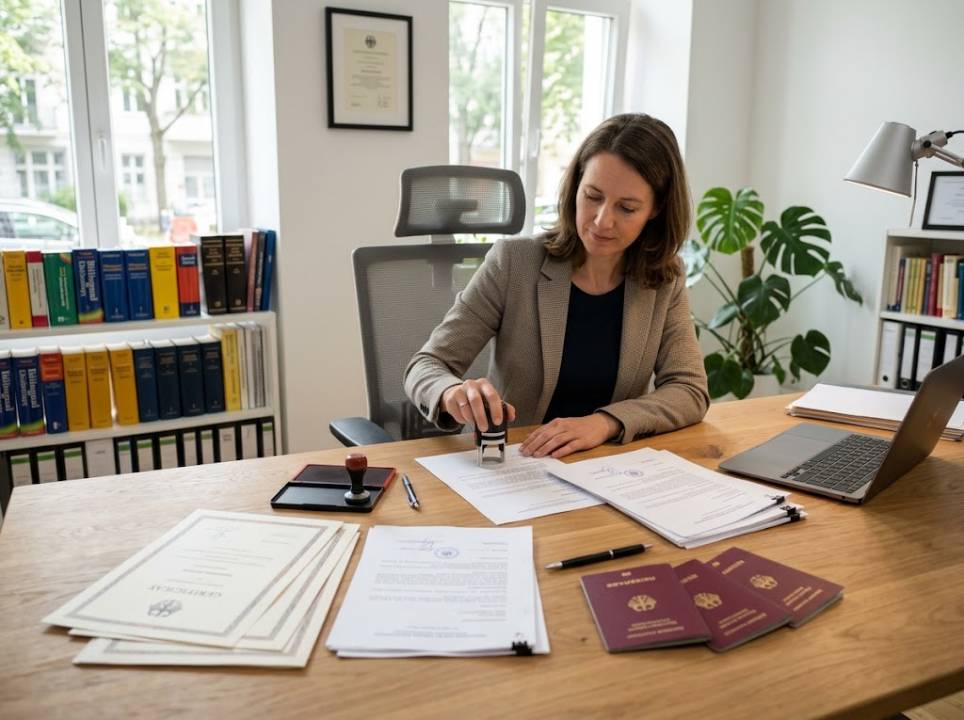
Anyone who has moved to Germany, studied there or signed a contract with a German company knows the moment. An office asks for a document in English, and a plain translation will not do. It has to be certified. That single word changes who can do the work, how long it takes and what the final page looks like.
This guide walks through what certification really means for German paperwork, where people lose time, and how to get a translation that is accepted the first time.
Why a Normal Translation Is Not Enough
A translation is a text. A certified translation is a text plus a promise. The translator or agency signs a statement that the English version is complete and accurate, adds their details and dates the document. Some authorities also want a stamp, an original signature in ink or a translator registration number.
Universities, immigration offices, courts and banks rely on that promise because they cannot check every German word themselves. If the statement is missing or incomplete, the whole application can stall, even when the translation itself is perfect.
Which German Documents Usually Need Certification
The list is longer than most people expect. Typical requests include:
- Geburtsurkunde (birth certificate) and Heiratsurkunde (marriage certificate)
- Abiturzeugnis, university transcripts and diplomas
- Führerschein (driving licence) for exchange abroad
- Arbeitszeugnis (employer reference) for job applications
- Court rulings, divorce decrees and powers of attorney
- Company registration extracts (Handelsregisterauszug)
Each of these has its own format quirks. German certificates often contain official abbreviations, handwritten notes in the margin or older stamps from municipal offices. A good translator renders all of it, including the seals, so that the reader in the UK or the US sees exactly what the German clerk saw.
Certified, Sworn or Notarised
The terms are often mixed up, and the difference matters.
Certified usually means the translator or agency confirms accuracy in a signed statement. This is the standard in the UK for most visa, university and employment purposes.
Sworn refers to a translator who has taken an oath before a German court (beeidigter or ermächtigter Übersetzer). German authorities generally want this when an English document is translated into German.
Notarised adds a notary who confirms the identity of the translator, not the quality of the translation. Some foreign authorities ask for it, often together with an apostille.
Before ordering anything, ask the receiving office which version it needs. One email can save a week.
How the Process Works in Practice
Most people never meet their translator. The usual route is simple. You scan or photograph the document, send it in, receive a quote and a delivery date, and get back a signed PDF or a paper copy by post.
Working with an agency that offers certified translation services for a wide range of language pairs helps when a file mixes several documents, for example a German diploma with a French supplement. One team handles the full set and issues matching certification statements, which keeps the paperwork consistent.
For UK use, the government explains what a proper certification statement should include on its page about certifying a document. It is worth reading before you submit anything to a UK office.
Common Mistakes That Delay Applications
Most rejections come from small details rather than poor language. Watch out for these:
- Names spelled differently across documents. Umlauts are a classic problem. Müller can become Muller or Mueller, and the authority may treat these as different people. Agree on one spelling and use it everywhere.
- Missing back pages. German certificates often carry stamps or notes on the reverse. If they are not translated, the translation is incomplete.
- Poor scans. Cropped edges or blurry seals force the translator to mark text as illegible, which can raise questions.
- Old copies. Some offices want a recent extract, not a copy issued twenty years ago.
Timing and Cost
A single certificate is often ready within one or two working days. Longer files such as transcripts with module descriptions take more time, especially when technical terms from engineering or medicine are involved.
Prices usually depend on page count, language pair and delivery format. Paper copies sent by post cost a little more than a digitally signed PDF. If you need several copies, order them at the same time. Asking for an extra original later is slower and often more expensive.
Choosing the Right Translator
For German documents, look for three things. First, native command of the target language. Second, real familiarity with the German administrative system, because terms like Meldebescheinigung or Führungszeugnis have no neat one word equivalent. Third, a clear certification statement that matches what your receiving authority expects.
Ask for a sample of a past certification statement with personal data removed. A professional provider will have no problem sharing it.
A Short Checklist Before You Order
- Confirm whether certified, sworn or notarised is required
- Collect clean scans of every page, front and back
- Decide on one spelling of every name
- Check whether a digital PDF is accepted or a paper original is needed
- Plan a few days of buffer before your deadline
Paperwork rarely feels exciting, but getting this part right means the conversation with the university, employer or immigration office can move on to what really matters. A well prepared certified translation is the quiet document that keeps everything else on schedule.